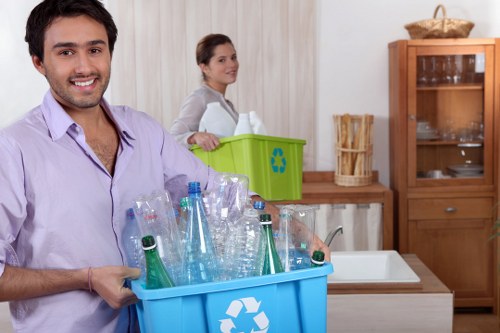
Richmond House Clearance — Recycling and Sustainability
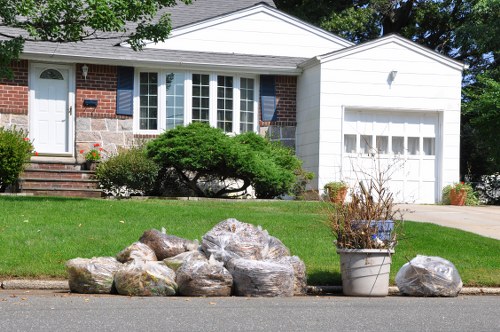 Richmond House Clearance is committed to creating an eco-friendly waste disposal area approach for every job. Our sustainability statement focuses on reducing landfill, increasing reuse and diverting materials through a structured sustainable rubbish area programme. We set an ambitious recycling percentage target and track progress across all clearances to ensure that our Richmond house clearance recycling initiatives are measurable and transparent.
Our core aim is to work in step with borough-level recycling systems. We align with local waste separation guidance and support the boroughs' approaches to food waste, mixed paper, plastics and glass separation. By mirroring local policies we make it easier for customers to benefit from kerbside sorting rules and for us to route materials to the correct local transfer stations and materials recovery facilities.
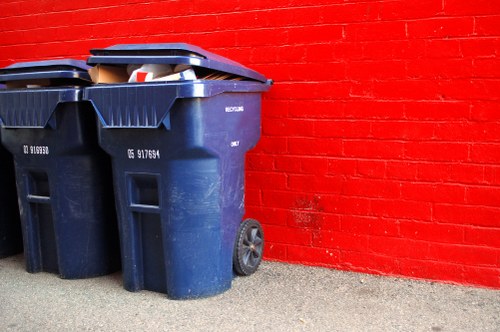
Recycling targets and reporting
We have set a company-wide recycling percentage target of 85% reuse and recycling by 2030. This target covers bulky items, household recyclables, electricals and construction-type waste from clearances. Regular internal audits, route-level reporting and partnerships with certified processors help us measure performance. We publish annual progress summaries and actively refine processes to improve our sustainable rubbish area outcomes.To reach that 85% objective we prioritise reuse wherever possible. Items in good condition are diverted to charity partners and community reuse hubs rather than being processed as waste. Furniture, household goods and usable appliances are carefully assessed on-site, photographed and catalogued for donation offers. This reuse-first model reduces carbon impact and supports local social programmes.
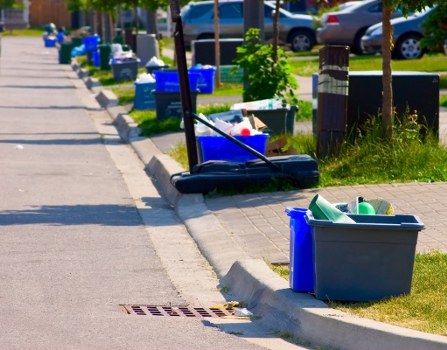
Local transfer stations and materials recovery
We work closely with nearby transfer stations and MRFs across west and southwest London, including facilities serving Richmond, Hounslow and neighbouring boroughs. These transfer points allow us to segregate streams correctly – wood, metals, mixed recyclables and hazardous items – ensuring the highest recovery rates. Consolidation at transfer stations reduces double-handling and lowers emissions from transport.Our sustainable rubbish area procedures include pre-sorting at the property, careful containment and labelling of waste streams, and route optimization to combine loads bound for the same recovery centres. This operational discipline results in fewer journeys and faster processing at the local waste infrastructure, contributing to a low-carbon clearances ethos.
Charity partnerships and community reuse
We have established ongoing partnerships with local re-use charities and social enterprises to maximise the life of household goods. Our network includes community furniture re-use groups, homelessness support charities and appliance refurbishment projects. These collaborations help redirect items from the waste stream to people in need and to social enterprises that employ local residents.Examples of our recycling activity include:
- Donation of saleable furniture to re-use charities
- Referral of functional appliances to refurbishment schemes
- Segregation of wood and metal for material recovery
- Safe handling and recycling of small electricals and waste batteries
We also support local swap events and community clear-outs, enabling neighbourhood-level reuse and minimising disposal. These initiatives reflect our ambition to be a leader in sustainable house clearance services across Richmond and surrounding boroughs.

Low-carbon fleet and operational efficiency
Our fleet strategy is central to delivering a truly green clearance service. We operate a mixture of electric and hybrid vans and have phased in low-emission vehicles for short urban runs. Route planning software and load consolidation are standard practice to reduce fuel consumption and time on the road. Low-carbon vans are paired with driver training on eco-driving techniques to further cut emissions.We continuously monitor fuel and energy performance to identify opportunities for improvement. Where appropriate, we also deploy cargo bikes for small-item collections in dense urban locations, reducing congestion and emissions while supporting a sustainable rubbish area model that is sensitive to local streets.