House Clearance in Richmond

Our house clearance in Richmond covers homes, flats and inherited properties that need a careful, organised service from start to finish. We deal with the practical side of clearing furniture, household contents and general domestic items so rooms can be handed back in a tidy condition. Whether the task involves a single room or a full property, the aim is the same: a clear plan, respectful handling of items and a result that makes the property usable again.
We work across the service with an emphasis on sensible decisions about what stays, what is removed and how the job is approached. Some clearances are straightforward, while others need more sorting because of mixed contents, awkward access or items that require separate handling. A good clearance is rarely just about lifting objects; it is about working methodically, keeping the process manageable and making sure the right items are removed in the right way. Good planning helps avoid delays and helps the day run smoothly.
If you are comparing options, start with what needs clearing and the type of property involved. You can describe the rooms, access and any larger pieces when you ask for a quotation, and that gives a clearer basis for advice. If you are ready to take the next step, request a quotation today. The more accurate the outline, the easier it is to quote properly.
What our Richmond clearance service can include

A house clearance can involve far more than furniture alone. It may include clothes, books, kitchen contents, ornaments, small appliances and everyday household items that have accumulated over time. When properties are being prepared for sale, let, renovation or an estate matter, the work often benefits from a structured approach that separates reusable items from general waste. That keeps the clearance practical and avoids unnecessary handling.
For some homes, the main challenge is volume. For others, it is the variety of materials that must be dealt with carefully. We can plan around bedrooms, loft spaces, cupboards, garages and reception rooms, with attention to items that are heavy, awkward or delicate. Where possible, useful items can be identified for appropriate onward handling, while the rest are removed in an orderly way. This keeps the service focused and efficient without making assumptions about what the property contains.
- Full and partial house clearances
- Clearing individual rooms or storage areas
- Removal of bulky domestic furniture
- Sorting mixed household contents
- Clearing properties for sale, rent or refurbishment
Furniture, bulky items and room-by-room clearance
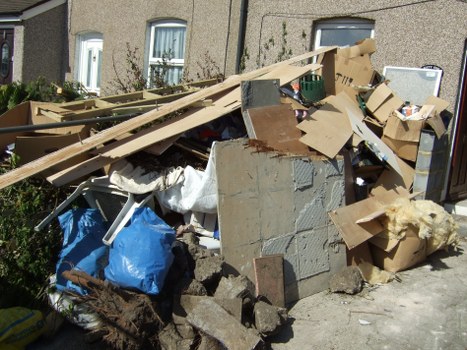
Large furniture often shapes the whole job, especially when access is tight or when pieces need to be moved from upper floors. Sofas, wardrobes, beds, tables and cabinets all need different handling depending on size, weight and condition. In a practical clearance, bulky items are assessed first so the sequence of removal makes sense and the rooms can be opened up without repeated lifting. This is where an organised process matters most.
Room-by-room clearance can suit properties where only selected areas need attention. For example, one room may be full of stored items while the rest of the home remains in use. In that case, the work should be planned so the liveable parts of the property are respected and the clearance stays targeted. The same careful approach helps with mixed furniture and smaller contents, because it avoids confusion between items that are to stay and those that are to be removed.
If you have a specific room, a group of larger pieces or a mixture of furniture to clear, a short description is often enough to get started. Photographs and access notes can be especially helpful when stairs, narrow entrances or parking arrangements may affect the work. For a simple enquiry, a few clear details are usually better than a long explanation.
Whole properties, partial clearances and practical sorting

Not every clearance needs the entire property emptied. Some customers need one area cleared before decorating, while others need a partial service after moving out or after a family member has sorted the most personal belongings. Partial clearances are often best when the remaining contents still have a role, or when the property needs to stay partly furnished. The important point is to define the scope clearly before the work begins.
Whole-property clearances, by contrast, are usually about removing everything that is no longer needed and leaving the space ready for its next stage. That may involve more sorting, but it should still be handled in a steady sequence: identify what stays, gather the items to be removed, and work through the property in an organised order. This avoids accidental removal and makes it easier to cover each room properly. Careful sorting is central to a good result.
For the clearest quotation, it helps to know whether the job is full or partial, whether any items are staying behind and whether there are bulky pieces that may affect access. A brief outline is enough to begin, and it lets us focus on the right type of clearance rather than guessing at the work involved. Contact us when you are ready to arrange the next step.
About Richmond
Richmond upon Thames lies on a distinctive bend of the River Thames in south-west London, combining riverside scenery with one of the capital’s most recognisable historic landscapes. The area grew from a royal retreat associated with the Tudor period, and its long connection with the monarchy remains part of its identity. Richmond Palace itself is gone, but the town’s Georgian and later streets still reflect a settled urban character, with terraces, civic buildings and shops arranged around a compact centre. The riverfront is one of its defining features, especially around Richmond Bridge and the embankment, where views open towards the watermeadows and parkland. Nearby Richmond Green preserves a traditional open space in the heart of the town, while the wider borough is known for large swathes of green landscape, including Richmond Park, which was enclosed in the seventeenth century and is now one of London’s best-known royal parks. The park’s deer, open grassland and ancient trees make it a major natural landmark, while Kew Gardens, further east in the borough, adds an internationally significant botanical setting. Richmond also has a strong cultural side, with theatres, independent shops and riverside walks giving the town a calm but active atmosphere. The combination of historic architecture, open space and transport links has long made it a distinctive part of London rather than just another suburban district. Its streets, parks and river views create a place that feels both urban and unusually spacious, with layers of history visible in the built environment and the landscape around it.
Access, timing and preparation for the work
Clearances run more smoothly when access details are understood in advance. Stairs, narrow hallways, basement rooms, loft hatches and limited parking can all affect how the job is organised. If the property has features that may slow movement through the building, it is sensible to mention them early so the plan reflects the real layout. That helps avoid unnecessary disruption and makes the process easier to coordinate around other work taking place at the property.
It also helps to know whether anyone will be on site, whether keys are available and whether certain rooms must remain undisturbed. These details matter because the clearance should follow the agreed scope without confusion. In many cases, a few photos and a short note about access are enough to create a practical outline. If you are dealing with a time-sensitive property, provide the basic facts as soon as you can so the quotation can be based on the proper circumstances.
For a quick start, you can make a simple list of rooms and large items before contacting us. That keeps the conversation focused and helps us understand what the job really involves. Request a quotation when you are ready.
Household contents, recyclables and careful removal
House clearance work often includes a mixture of materials rather than one tidy category. A room can contain wood furniture, textiles, electrical items, packaging, paper, crockery and assorted household contents, each needing a sensible route out of the property. The service is most useful when these different items are considered together, because that makes it easier to separate what can be reused, recycled or otherwise dealt with appropriately. It is a practical process, not just a lifting exercise.
Sorting the contents properly matters because it affects both the pace of the work and the standard of the finish. Items that are still suitable for use may be identified separately from general household material, while damaged or worn pieces can be removed as part of the main clearance. This approach is especially useful where the contents have built up over time and the property has lost its sense of order. The aim is to reduce clutter in a way that feels controlled and sensible.
We also pay attention to items that need a more cautious approach, such as breakables or awkward mixed piles stored in cupboards, lofts or under stairs. These spaces are often where smaller objects have accumulated, so they need methodical handling rather than a rushed sweep through the property. A thoughtful sequence makes the final result cleaner and more reliable. If you need a quotation, a short description of the contents will help.
Furniture clearance for homes, flats and estates
Furniture clearance can sit alongside a wider house clearance or form the main part of the job on its own. It is especially useful when a property needs only larger items removed, or when the existing furniture no longer suits the next stage of use. Beds, sofas, wardrobes, chairs and tables each bring different handling needs, and the work should be paced accordingly so items are moved safely through the property. The practical challenge is often in the exit route as much as the room itself.
In flats, upper floors and older houses, access often determines how the furniture is approached. Some pieces can be carried out intact; others may need to be taken apart where that is the sensible route and where the item’s condition supports it. A good clearance balances speed with care, so the property remains protected and the rooms can be left in a better state than before. That is particularly important where shared areas, stairs or hallways are involved.
When furniture forms the bulk of the work, the best quotation usually starts with dimensions, floor level and any limitations on access. If you are unsure whether a piece can be moved easily, it is better to mention it than to leave it out. That allows the plan to account for the real size of the job and helps avoid surprises on the day.
Office, garage and loft clearances alongside domestic work
Some property clearances go beyond the main living areas. Garages, lofts and home offices often contain a different mix of objects from the rest of the house, including stored paperwork, old fittings, files, shelves, tools and general clutter. These spaces can become difficult to use when contents have built up, so the clearance needs to be organised with attention to what is stored and what should remain. The work is usually most effective when each space is treated on its own terms.
Loft spaces in particular may hold lighter items, packed boxes and long-term storage that has not been reviewed for years. Garages can contain everything from garden equipment to surplus furniture, while office areas may need more careful sorting because of documents, equipment and mixed media. A single method does not fit every space, so the clearance should be planned around the contents rather than the label on the room. This keeps the result practical and avoids unnecessary handling.
If a property includes more than one type of storage space, mention that when you ask for a quotation. It is useful to know which areas are part of the job and which are not, because that helps keep the scope clear. You can then decide whether to combine the work into one visit or separate it by area depending on what needs doing.
Pricing factors and what shapes a quotation
Quotation requests are easier to handle when the main pricing factors are clear. The amount of contents, the type of furniture, the number of floors, access conditions and the presence of mixed items all influence how a clearance is approached. These are the practical details that matter because they affect labour, time and handling rather than just the overall size of the property. A careful quotation looks at the work as it actually stands, not as it might appear from one room alone.
It can also be helpful to say whether the property is occupied, empty or partly sorted. That does not mean every item has to be listed, but the more clearly the contents are described, the more sensible the estimate can be. If there are especially bulky or awkward pieces, including them in the first message saves back-and-forth later. The goal is not to create a long form; it is to give enough detail for a reliable response.
Need a quote for house clearance in Richmond? Send a clear outline of the rooms and items involved, and we can take it from there. If the job is straightforward, this can be very quick. If it is more involved, the quotation stage is the point where the scope is defined properly and the work can be prepared in a sensible order.
Recycling, reuse and responsible handling
Responsible house clearance is not only about removing items from a property; it is also about considering where different materials should go next. Reusable items, recyclable materials and general household contents each have a different place in the process, and treating them as if they were all identical would be poor practice. A structured approach is better because it keeps the clearance orderly while supporting sensible onward handling of the materials involved.
That matters particularly where a property contains a wide mixture of domestic items. One room may hold furniture in usable condition, another may contain worn household goods, and a third may be full of boxes or loose belongings that need to be sorted carefully. The clearance should respect those differences rather than flatten them into one broad category. Done well, this reduces waste and gives the customer a clearer picture of how the job will be managed from room to room.
Where you have concerns about mixed contents or items with different conditions, mention that in your enquiry so the work can be planned accordingly. It is often the small details that change the sequence of the clearance. Clear communication early on helps the process stay practical and keeps the job aligned with the actual contents of the property.
Next steps for arranging a house clearance

When you are ready to arrange a house clearance, the simplest next step is to outline the property, the main items and any access points that could affect the work. That can be enough to begin a useful quotation, especially if the job is a standard domestic clearance or a straightforward furniture removal. If the property has several rooms, storage spaces or a mixture of bulky and smaller items, a short written summary will still usually cover the essentials without becoming complicated.
From there, the focus is on matching the service to the real scope of the job. Some customers need a full clearance, others need one room or one area, and some need help with furniture or storage spaces only. The best outcome comes from describing what needs removing and what is remaining, so the clearance can be planned in a way that reflects the property rather than a generic template. That keeps the service efficient and the quotation meaningful.
To move forward, request a quotation with the key details you already know. If you prefer, keep it brief and include only the rooms, larger items and access notes that matter most. That is usually enough to start the conversation and helps ensure the response is based on the actual work needed.